Home
Home Articles
 Twos Talks
 Videos
Q&A with Ralph Steadman: Illustration, Risk and Finding a Voice
Twos Studio’s exclusive interview with Ralph Steadman on his illustration, creative process, and approach to making work
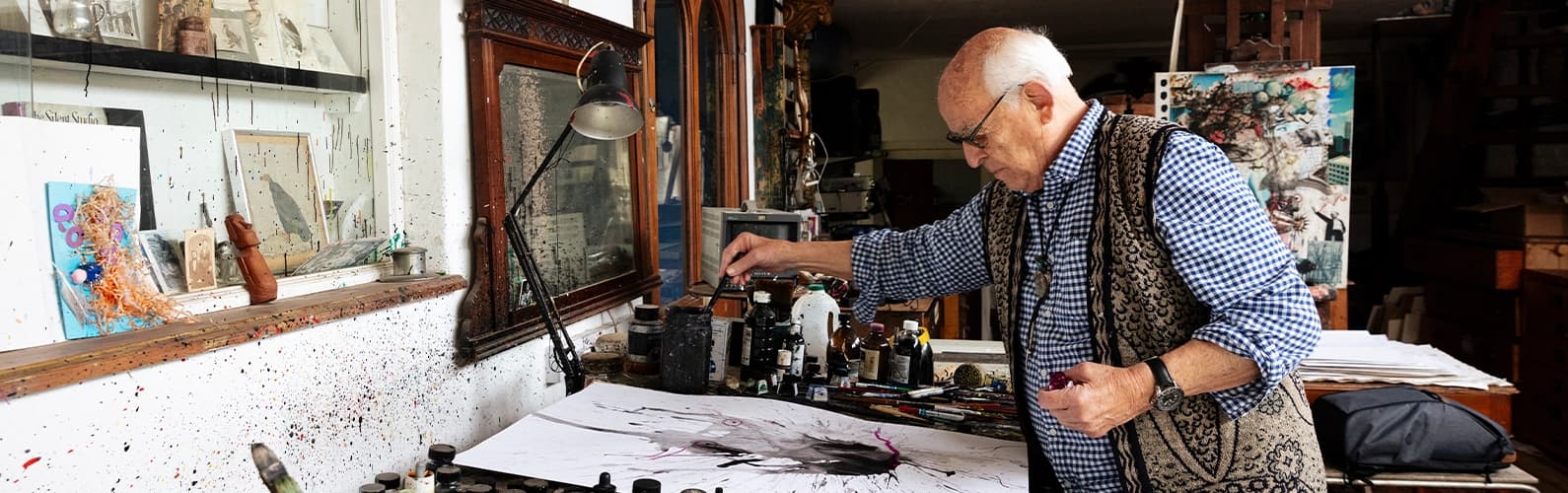
Ralph Steadman is one of those rare figures whose work is inseparable from a moment in cultural history, yet has never been confined to it. He emerged from the turbulence of the 1970s and became closely intertwined with the rise of Gonzo journalism alongside Hunter S. Thompson. His drawings have remained restless, physical, and unwilling to settle. Across decades of illustration, publishing, and collaboration, Steadman has continued to work with the same urgency and a willingness to take risks, while refusing to draw a line between artistic integrity and making a living.
You’ve spoken about building model airplanes as a child and later working at the de Havilland Aircraft Factory doing technical drawings. How did that precise, controlled way of drawing shape your later work, which became so expressive and instinctive? What do you think caused that shift?
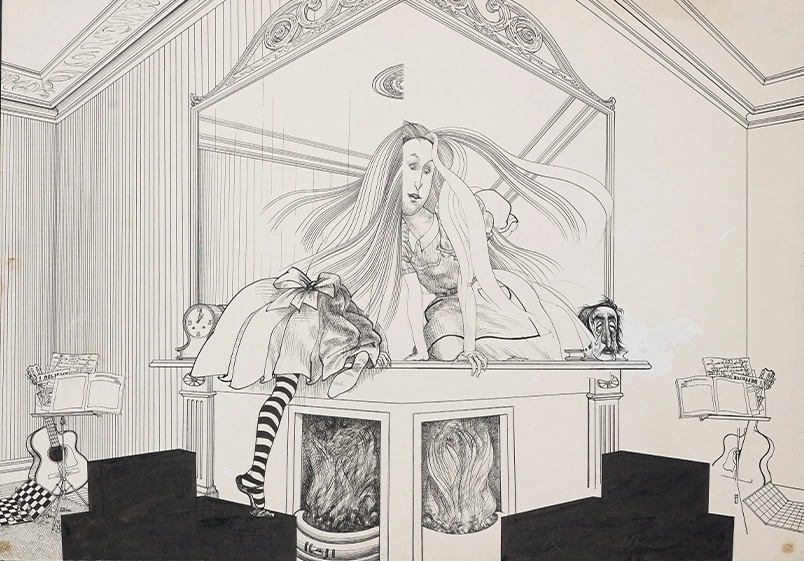
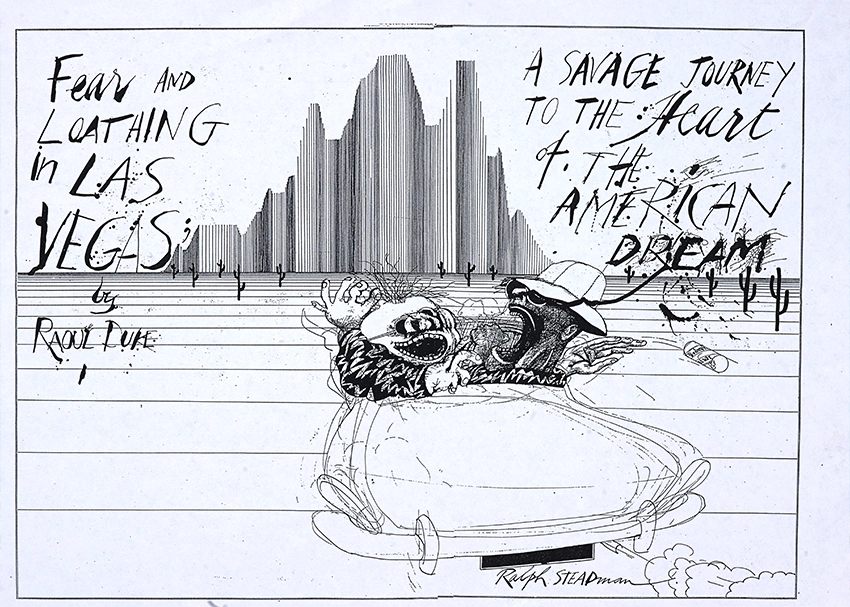
I think my main takeaway from my time at de Havilland was the technical drawing. I have continued to use the parallel lines and concentric circles throughout my career. It was never a shift - it was the opportunity to use any and all techniques. The clean lines contrast with the freestyle drawing and blots which were a result of my clumsiness. In Alice Through the Looking Glass, I used the technical drawing techniques and tools a lot, as well when I illustrated Fear and Loathing in Las Vegas. The lines and the perspective really define a space which characters can then inhabit.
Your illustrations became a key part of the visual foundation of Gonzo journalism. Do you think that connection came more from your drawing technique, your sense of storytelling, or from understanding Hunter S. Thompson himself and what he was trying to do as a writer?
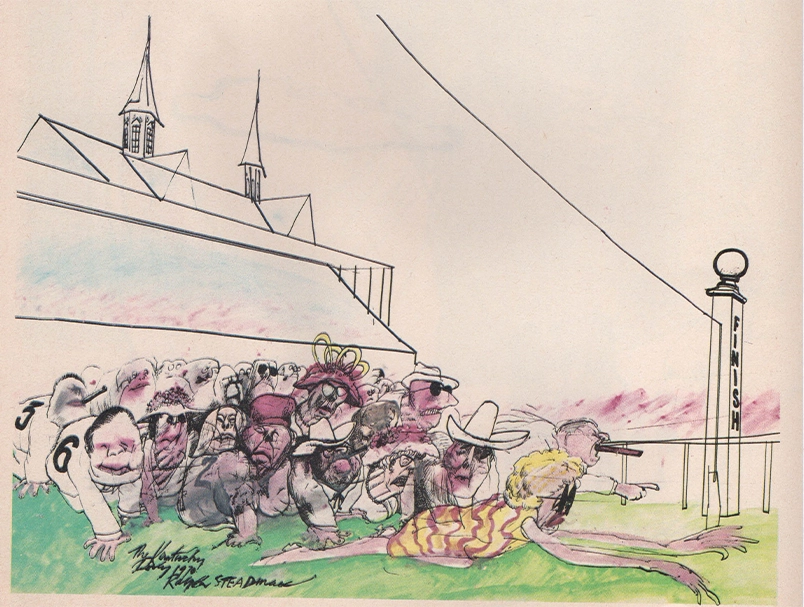
When I met Hunter neither of us knew what to expect from the other. He said I looked like “a matted haired geek with string warts”. I had a goatee at the time which was very unusual in Kentucky. We were so different. Scanlan’s Magazine wanted us to find the face of the Kentucky Derby; we set out to immerse ourselves in the event. There really were no half measures. Everything had to be experienced to the max. It was amazing that of all the people in the USA, I should meet the one man I needed to meet to push me out of my comfort zone and force me to take risks that I probably never would have done otherwise. Sometimes I would draw to the writing that Hunter would send me, but equally sometimes I would send Hunter the drawings to write to. The way we bounced off each other and what we were doing was crucial.
You studied Graphic Arts at the London College of Printing and have often talked about the need for art to also earn a living. Looking back at projects ranging from book publishing and editorial illustration to cultural collaborations across film, television, and food publishing, what helps an artist understand a brief and satisfy a client while still leaving a strong personal voice in the work?
Whether an artist is working on a project of their own, or for a client, they can really only be true to where the work guides them. I have never offered roughs or preliminary sketches, but dive straight into the final artwork. You just have to be certain of your own voice. Do not apologize for needing to earn a living. Someone asked me once, why was I a commercial artist. I pointed out that there is nothing romantic about starving in a garret in Paris. Just watch La Boheme!! I don’t know why an artist should be ashamed to make a living. So many other industries depend on them as a starting point. Lawyers write the contracts that allow people to use someone’s art for something, accountants make sure the artist gets their fee, shops stock items designed by a creative person. Art is so often the first step in so many endeavors. Everyone else gets paid - why is it that people feel the artist should be last on the list?
When a young illustrator is faced with a brief but struggles to see a clear visual direction, what advice would you give them? How can they avoid simply illustrating the surface of a story and instead bring their own interpretation into the work?
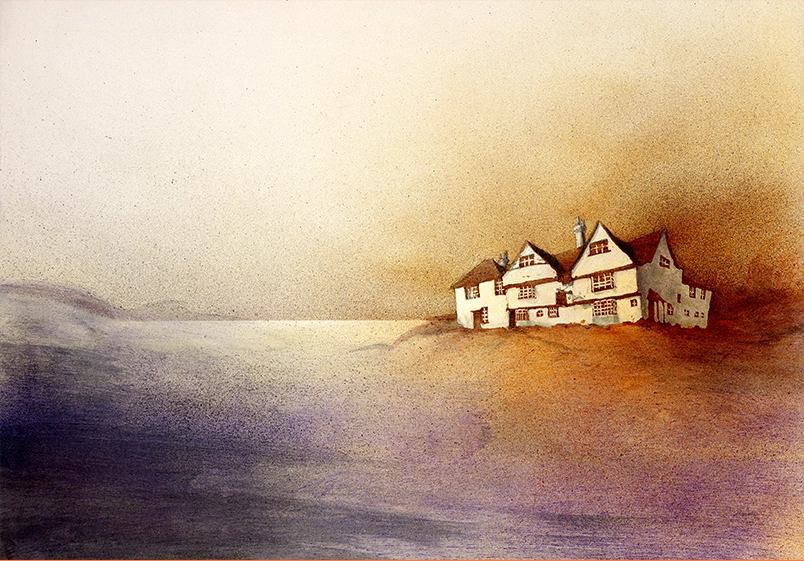
Sometimes it is as simple as just starting, with no real idea of where the illustration will take you. I often start with a splat, right in the middle of the page. That will take you in a direction you could never have imagined. I find bringing elements from my life into the work gives it an authenticity. My Alice in Wonderland is actually based on my eldest daughter, Suzannah, and some of the expressions that would cross her face as a child. The Admiral Benbow Inn, in Treasure Island is actually my local pub in the village in Kent where I live. Even the slightly mad illustrations for Oddbins wine merchants all start from simply observing the people and places that I was lucky enough to encounter on our trips around the world. Even if the image seems insane, people will recognize something in it themselves and that will resonate with them.
You’ve often said that artists shouldn’t obsess over finding a ‘style’. Throughout your career, you experimented with many materials and approaches. In your experience, what actually leads to the development of a personal visual language?
It’s not about style, it’s about content. Style gets in the way. There are so many ways to be creative. I would experiment with anything and everything that I could, whether it was drawing, photography, theatre, sculpture, collage - whatever came into my hands. Each person’s view of the world is unique and the artist expresses their own uniqueness.
Which artists or figures had the strongest influence on you early on, and how do you feel those influences shaped the way you see and create work today?
Picasso has always been a massive influence on me. His way of drawing was so natural. He was unafraid and helped shape art and how we understand and appreciate it today.
George Grosz I always admired. His linework is so certain and unhesitant and that always resonated with me.